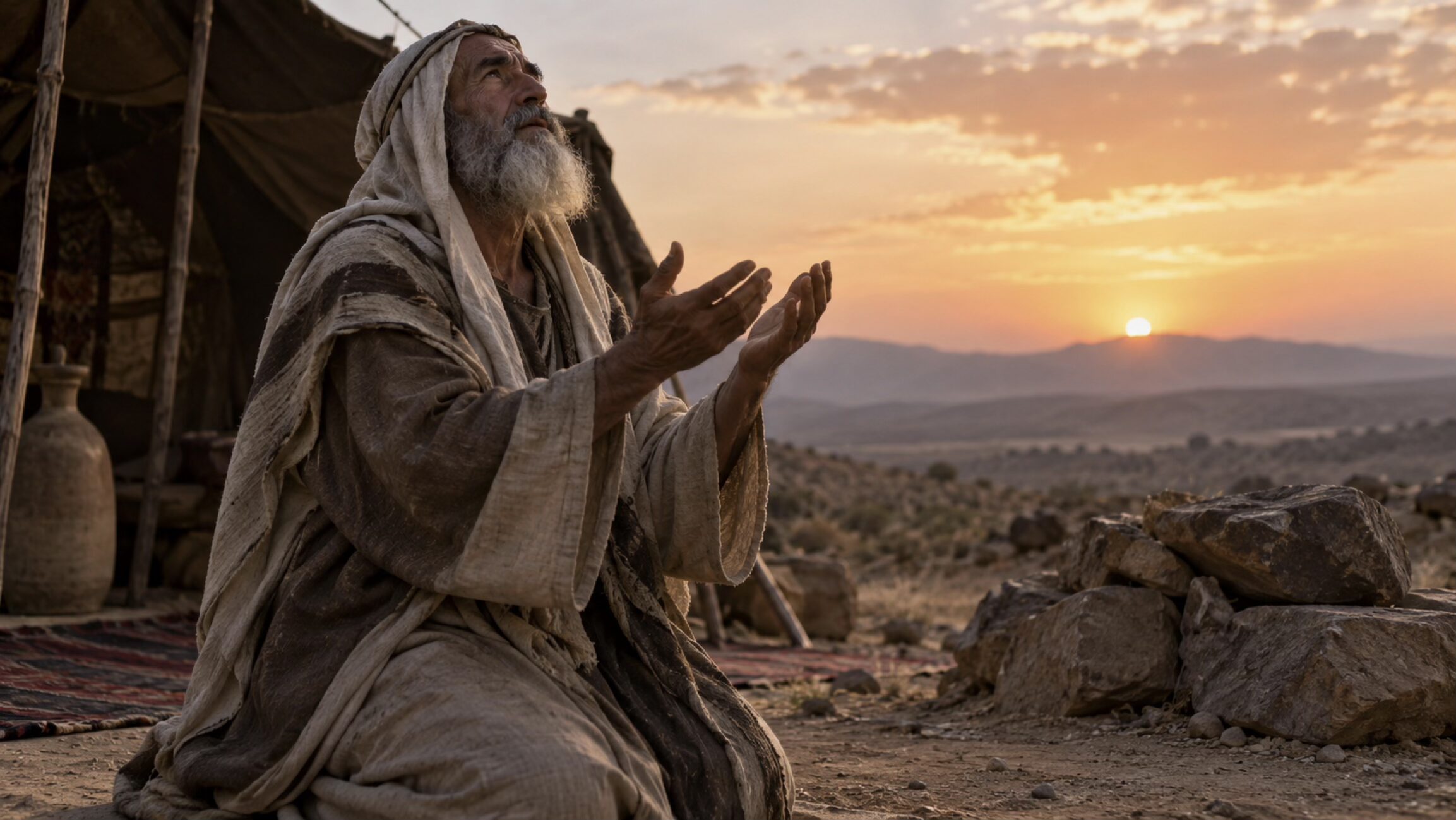
WHEN YOU PRAY FOR OTHERS, WHAT KINDS OF THINGS DO YOU PRAY FOR?
DO YOU MOSTLY PRAY FOR BELIEVERS OR UNBELIEVERS? WHY?
THE STORY SO FAR
We’ve come to the point in Abraham’s life where God has promised him a son and that the nations of the earth would be blessed by him. He called Abraham to leave his family and home for the land of promise. Abraham took his nephew, Lot, with him on the journey. After a while, the possessions of Abraham and Lot became too great to dwell together, so the two men separated. Lot moved near the city of Sodom and eventually took up residence there.
Now we come to the Lord and two angels visiting Abraham. God confirms his promise to him for a son, but as the angels prepare to leave, God brings up something to Abraham that gives him an opportunity to pray in intercession.
Genesis 18:17-33
The LORD said, “Shall I hide from Abraham what I am about to do, 18since Abraham will certainly become a great and mighty nation, and in him all the nations of the earth will be blessed? 19For I have chosen him, so that he may command his children and his household after him to keep the way of the LORD by doing righteousness and justice, so that the LORD may bring upon Abraham what He has spoken about him.” 20And the LORD said, “The outcry of Sodom and Gomorrah is indeed great, and their sin is exceedingly grave. 21I will go down now and see whether they have done entirely as the outcry, which has come to Me indicates; and if not, I will know.”
22Then the men turned away from there and went toward Sodom, while Abraham was still standing before the LORD. 23Abraham approached and said, “Will You indeed sweep away the righteous with the wicked? 24Suppose there are fifty righteous people within the city; will You indeed sweep it away and not spare the place for the sake of the fifty righteous who are in it? 25Far be it from You to do such a thing, to kill the righteous with the wicked, so that the righteous and the wicked are treated alike. Far be it from You! Shall not the Judge of all the earth deal justly?” 26So the LORD said, “If I find in Sodom fifty righteous within the city, then I will spare the entire place on their account.” 27And Abraham replied, “Now behold, I have ventured to speak to the Lord, although I am only dust and ashes. 28Suppose the fifty righteous are lacking five, will You destroy the entire city because of five?” And He said, “I will not destroy it if I find forty-five there.” 29And he spoke to Him yet again and said, “Suppose forty are found there?” And He said, “I will not do it on account of the forty.” 30Then he said, “Oh may the Lord not be angry, and I shall speak; suppose thirty are found there?” And He said, “I will not do it if I find thirty there.” 31And he said, “Now behold, I have ventured to speak to the Lord; suppose twenty are found there?” And He said, “I will not destroy it on account of the twenty.” 32Then he said, “Oh may the Lord not be angry, and I shall speak only this once: suppose ten are found there?” And He said, “I will not destroy it on account of the ten.” 33As soon as He had finished speaking to Abraham the LORD departed, and Abraham returned to his place.
WHO WAS ABRAHAM PRAYING FOR IN THIS PASSAGE, WHO WAS HIS FOCUS?
BACKGROUND
Our study today is about intercession. Intercession is the act of praying to God on behalf of another person or group of people. An intercessor “stands in the gap,” bringing someone else’s needs, struggles, salvation, protection, or circumstances before God.
The biblical idea is especially clear in 1 Timothy 2:1: “I urge, then, first of all, that petitions, prayers, intercession and thanksgiving be made for all people.”
Intercession is prayer focused on others. Ordinary prayer can include many things—praise, confession, thanksgiving, asking for our own needs, and seeking God’s guidance. Intercession specifically turns our attention toward the needs of someone else.
Examples include:
- Abraham interceded for Sodom — Genesis 18:22–33.
- Moses interceded for Israel after their sin — Exodus 32:11–14, 30–32.
- Samuel interceded for Israel — 1 Samuel 7:5–9.
- Daniel interceded for his people, confessing their sins and asking for mercy — Daniel 9:3–19.
- Jesus interceded for His disciples and future believers — John 17.
- Paul continually interceded for the churches — Ephesians 1:15–19; Philippians 1:3–11; Colossians 1:9–12.
One of the most important New Testament teachings about intercession is that Jesus Himself intercedes for believers:
Romans 8:34: “Christ Jesus who died—more than that, who was raised to life—is at the right hand of God and is also interceding for us.”
And Hebrews 7:25 says: “He always lives to intercede for them.”
The Holy Spirit also participates in intercession. Romans 8:26–27 says that when we do not know how to pray, the Spirit intercedes for us according to the will of God.
A powerful Old Testament picture comes from Ezekiel 22:30, where God says: “I looked for someone among them who would build up the wall and stand before me in the gap on behalf of the land…”
That captures the heart of intercessory prayer: seeing someone’s need and voluntarily bringing that need before God.
So a concise definition would be:
Intercession is prayer in which we approach God on behalf of others, asking Him to act according to His mercy, purposes, and will in their lives. It is one of the ways Christians practice love: we carry the burdens of others into the presence of God.
“Intercession, then, highlights naturalness, boldness, and familiarity in prayer.”(1) The more we know and understand God, the more natural it will be for us to pray for others. We see this in Abraham. As he learned about God’s character, he used these character traits in his prayer for others, as we will see.
EXAMINATION
(V.17-18) The LORD said, “Shall I hide from Abraham what I am about to do, since Abraham will certainly become a great and mighty nation, and in him all the nations of the earth will be blessed?
The work of prayer is not initiated by Abraham, but by God. By revealing to Abraham what he is about to do, God is giving Abraham an opportunity to intercede with him regarding Sodom. He begins by noting his special relationship with Abraham. He will make him “a great and mighty nation.” All nations will be blessed through him. That puts Abraham in a unique position with God. Because he has a special relationship with God, Abraham is in a unique position to petition God on behalf of others. God wants Abraham to use his special relationship to intercede for others.
(V.20-21) The LORD said, “The outcry of Sodom and Gomorrah is indeed great, and their sin is exceedingly grave. I will go down now and see whether they have done entirely as the outcry, which has come to Me indicates; and if not, I will know.”
SINCE GOD IS GIVING ABRAHAM AN OPPORTUNITY TO PRAY, WHAT DOES HE WANT ABRAHAM TO PRAY FOR?
Here we come to the issue that is on God’s heart. Sodom has great sin before the Lord and he has decided to deal with their sin. This is similar to the situation with Noah. Genesis 6:13 says, “God said to Noah, “The end of humanity has come before Me; for the earth is filled with violence because of people; and behold, I am about to destroy them with the earth.” In Abraham’s case, Abraham is being given a chance to intercede for the righteous, specifically, Lot. Abraham knows that just like in the days of Noah, God intends to do away with Sodom. But Abraham has an opportunity to stand in the gap for the righteous.
(V.23-25) Abraham approached and said, “Will You indeed sweep away the righteous with the wicked? Suppose there are fifty righteous people within the city; will You indeed sweep it away and not spare the place for the sake of the fifty righteous who are in it? Far be it from You to do such a thing, to kill the righteous with the wicked, so that the righteous and the wicked are treated alike. Far be it from You! Shall not the Judge of all the earth deal justly?”
ABRAHAM SEEMS SHOCKED BY WHAT HE’S HEARD. WHY DO YOU THINK HE RESPONDED THE WAY HE DID?
I think that Abraham is overwhelmed by the scale of what God is about to do. His speech indicates that he knows that the Lord intends to destroy an entire city. So, notice how Abraham positions his request to the Lord. He bases his petition upon the character of God as he understands it. He petitions God based on his justice. Notice what he says:
- “Far be it from you to do such a thing, to kill the righteous with the wicked.”
- “Shall not the judge of all the earth deal justly?”
Abraham is not manipulating God or painting God into a corner. He is interceding with God based upon what he knows about his character. Abraham knows that there is at least one righteous person within the city, Lot. In fact, this prayer of his is really centered on saving Lot from God’s justice. Notice God’s response.
(V.26) So the LORD said, “If I find in Sodom fifty righteous within the city, then I will spare the entire place on their account.”
There are two things at play here: God’s justice and God’s mercy. Certainly God can wipe out a wicked population without harming the righteous. That would be justice. Instead, God declares his mercy. He will spare all of the wicked on behalf of the righteous. Right away, God answers Abraham’s prayer in the affirmative. But it doesn’t end there. God’s positive response gives Abraham more boldness to continue his petition.
(V.27-28) Abraham replied, “Now behold, I have ventured to speak to the Lord, although I am only dust and ashes. Suppose the fifty righteous are lacking five, will You destroy the entire city because of five?” And He said, “I will not destroy it if I find forty-five there.”
ABRAHAM STARTED HIS PRAYER BOLDLY. BUT NOW HE DIALS IT DOWN A NOTCH, WHY?
While Abraham retains his boldness in approaching God, notice that he does not forget humility. God answered once, and he wants him to answer again, but he also remembers his place before God. He is the petitioner. Abraham says, “I am only dust and ashes.” This is not false humility. He’s standing before the God that is intent on destroying a city and in the past, destroyed an entire civilization in the flood. God has answered, but he wants more, so, humility is in order.
This is very different from how many Christians pray today. Christians in the Prosperity Gospel movement often cite God’s word back to him as if they can force his hand to give them what they want. They try to manipulate God into giving them what they want—more wealth, more power, more health. They remember boldness but forget humility.
(V.30) Then he said, “Oh may the Lord not be angry, and I shall speak; suppose thirty are found there?” And He said, “I will not do it if I find thirty there.”
The humility continues as Abraham asks further. Notice that he says, don’t be angry. He doesn’t want to push things too far. This is the first indication that Abraham knows there is a limit to how far he can go and how much God will entertain. Abraham is going to push his intercession right up to the limit. There’s going to come a time, as we will see, when intercession will end and Abraham will have to accept God’s answer. While God keeps giving Abraham yeses to his prayers, there is coming a no that Abraham will have to accept.
(V.32) Then he said, “Oh may the Lord not be angry, and I shall speak only this once: suppose ten are found there?” And He said, “I will not destroy it on account of the ten.”
Abraham pushes God’s grace to the limit. Will God spare the city for ten? God answers yes. Then Abraham stops. We might be tempted to think that Abraham reasoned that if God would spare the city for ten then he would spare it for one, for Lot. But the scripture doesn’t say that. I think Abraham knows he has reached his limit. He must trust God’s mercy where Lot is concerned. And this is where Abraham gets his unspoken no. Look at the next verse.
(V.33) As soon as He had finished speaking to Abraham the LORD departed, and Abraham returned to his place.
WHO STOPPED THE PRAYER AND WHY?
It wasn’t Abraham, it was God. Look carefully at the passage. God “finished speaking to Abraham.” God concludes the conversation, not Abraham. Then he leaves. Up until this point, God answers in the affirmative. But he stops at ten. This is where Abraham gets the unspoken no. He will spare the wicked for ten righteous, but not for one. He has his limits.
Of course, we know the rest of the story. The angels go to Sodom, they rescue Lot and his family, but destroy the city. There is only so far that God is willing to go to extend his mercy. For those who have received Christ’s sacrifice on the cross for their sin, God’s forgiveness and mercy are never ending. But for those who reject Christ, they experience his mercy for a time, but it will one day come to an end.
Finally, notice Abraham’s response to God ending the conversation. “Abraham returned to his place.” He knew it was over. There came a point when his intercession had to end. He had to accept and trust God’s answer and intercede no more. The end.
INTERPRETATION
What is the author’s big idea?
God gives us opportunity to intercede for others, then we should accept his answer when our prayers come to an end.
Intercession is a very important part of our prayer life. Our prayers should not be filled with only request for ourselves. God cares about our needs and wants to take care of us. But he wants us to do as Jesus did. Jesus interceded for his disciples and for others. We are never more like Jesus than when we are interceding for others. The scripture even says that the Holy Spirit intercedes for us with groanings too deep for words. Therefore, when we are interceding, we are in partnership with the Holy Spirit, seeking God for the benefit of others. This is the work of a priest, standing in the gap for others.
How often do you intercede for others, for your church, for the people you work with or your neighbors, for your family? Everyone who prays has an opportunity to intercede for others. It is something that God expects of us as he himself through his Holy Spirit is engaged in the very same thing.
APPLICATION
Just as Abraham had a special relationship with God, so too, we have a special relationship with God through Christ. Unlike the unbeliever, the scripture encourages us to use our special relationship to approach God in prayer. Hebrews 4:16 says, “Therefore let’s approach the throne of grace with confidence, so that we may receive mercy and find grace for help at the time of our need.” You have a special relationship with God. Take advantage of it.
We live in a day when God is giving us the opportunity to stand in the gap for the righteous, but also the wicked. God wants us to intercede for those who are without that special relationship that we enjoy. He wants us to address him regarding the church and those outside the church. Just as he wants us to share our faith in Christ, he wants us to pray in faith for Christ to be known.
Just as Abraham prayed to God by citing God’s character back to him, so too, we should appropriate what we know of the Lord in our prayers. If we know that he is kind, forgiving, long suffering, and merciful, we should incorporate those character traits into our prayers for others. God always rejoices to do his will and exercise his character. So, it gives God pleasure when we exercise those traits and use them in our prayers for others. If you want God to be merciful, imagine how much more he desires to exercise that mercy.
When God answers in the positive, increase your boldness by furthering your petition. Abraham didn’t stop praying at the first answer to his prayer. He went further, drilling down over time to his main point—the saving of Lot. Don’t give up on your prayers. Remember Jesus’ words, “Ask, and it will be given to you; seek, and you will find; knock, and it will be opened to you” (Matthew 7:7). The Greek here literally means keep asking, keep seeking, and keep knocking. If God answers in the affirmative once he may do so again. Persist.
While we must be bold and persist with God into prayer, we must also remember humility. We are not simply talking to a friend or neighbor. We are speaking to the God of the universe. This is the God of mercy, but he also does terrible things. He wiped out an entire civilization in Noah’s day. He destroyed the cities of Sodom and Gomorrah in fire. He exiled his own people, destroying Jerusalem and his temple and thousands died. Hebrews 10:31 says, “It is a terrifying thing to fall into the hands of the living God.” So, whatever your requests, keep humility in mind.
Finally, there comes a time when our intercession has to end. When we beseech God in prayer for others there comes a natural time when the Holy Spirit indicates that we’ve prayed enough, it’s time to wrap things up. He ends the conversation. To go further would be inappropriate. It’s like the child who never stops asking for more, more, more. Eventually, the parent says, “Enough!” When we sense that the time of intercession is over, whether God’s answer is yes or no, we have to trust that he will do what is right according to his will and character, not ours. Like Abraham, we must accept his answer and go to our place. The end.
—–
(1) Ryrie, Charles C. 1975. “Intercession.” In The Wycliffe Bible Encyclopedia, edited by Charles F. Pfeiffer, Howard F. Vos, and John Rea. Moody Press.