WHERE WE ARE IN THE STORY
In II Samuel 7, David gets it in his heart to build a temple for God, replacing the Tabernacle that Israel had had since the time of Moses. David was concerned that the great God of the universe was confined to a tent rather than having a glorious house. He consulted Nathan the prophet, who told him to proceed because the Lord was with him. But that night the Lord spoke a message to Nathan for David, telling him not to build him a temple because one of his descendants would build the temple, and that since David had this good thing in his heart to do for the Lord, the Lord promised David that he would build him a dynasty and make his name great, and that one of his descendants would sit on his throne forever.
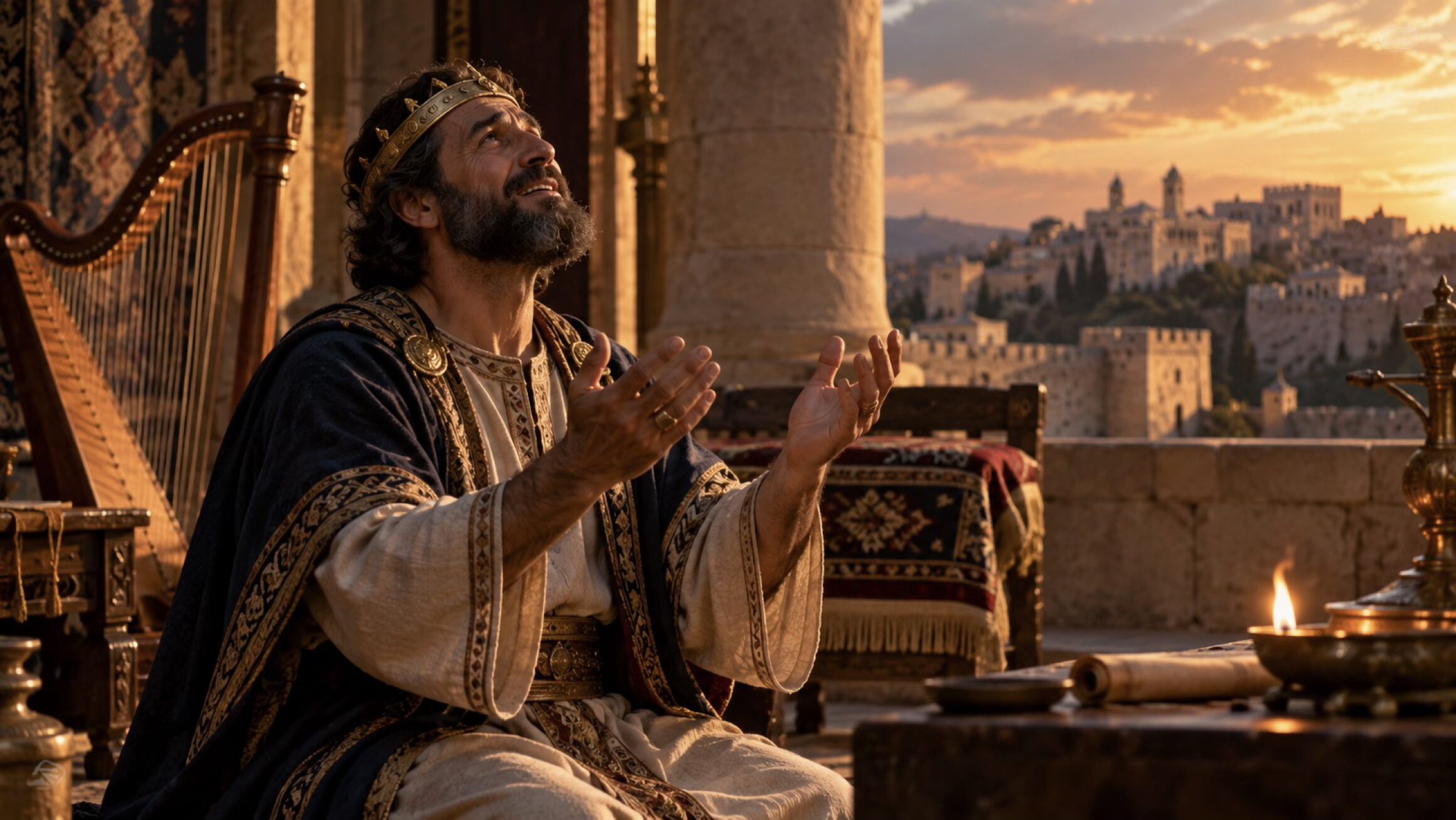
David was naturally overwhelmed when he heard this news and went and sat before the Lord to pray to him. This was David’s prayer.
II Samuel 7:18-29
18Then David the king came in and sat before the LORD, and he said, “Who am I, Lord GOD, and who are the members of my household, that You have brought me this far? 19And yet this was insignificant in Your eyes, Lord GOD, for You have spoken also of the house of Your servant regarding the distant future. And this is the custom of mankind, Lord GOD. 20Again what more can David say to You? For You know Your servant, Lord GOD! 21For the sake of Your word, and according to Your heart, You have done all this greatness, to let Your servant know. 22For this reason You are great, Lord GOD; for there is no one like You, and there is no God except You, according to all that we have heard with our ears. 23And what one nation on the earth is like Your people Israel, whom God went to redeem for Himself as a people, and to make a name for Himself, and to do a great thing for You and awesome things for Your land, because of Your people whom You have redeemed for Yourself from Egypt, from other nations and their gods? 24For You have established for Yourself Your people Israel as Your own people forever, and You, LORD, have become their God. 25Now then, LORD God, the word that You have spoken about Your servant and his house, confirm it forever, and do just as You have spoken, 26so that Your name may be great forever, by saying, ‘The LORD of armies is God over Israel’; and may the house of Your servant David be established before You. 27For You, LORD of armies, God of Israel, have given a revelation to Your servant, saying, ‘I will build you a house’; therefore Your servant has found courage to pray this prayer to You. 28Now then, Lord GOD, You are God, and Your words are truth; and You have promised this good thing to Your servant. 29And now, may it please You to bless the house of Your servant, so that it may continue forever before You. For You, Lord GOD, have spoken; and with Your blessing may the house of Your servant be blessed forever.”
BACKGROUND
In this passage we see two things tied together: gratitude and humility.
WHY ARE GRATITUDE AND HUMILITY TIED TOGETHER?
In the Bible, gratitude and humility are closely connected because genuine thankfulness begins with recognizing that what we have ultimately comes from God rather than from ourselves. Pride says, “I earned this.” Humility says, “I have received.”
A particularly clear example is Deuteronomy 8:10–18. Moses warns Israel that after they enter the land, prosper, and have plenty to eat, they must not forget God and say:
“My power and the strength of my hands have produced this wealth for me” (Deuteronomy 8:17).
Instead, they are to remember that God gave them the ability to prosper. The sequence is important: remembering God produces gratitude; forgetting God produces pride.
This pattern appears throughout Scripture:
- Gratitude acknowledges dependence. David prayed, “Everything comes from you, and we have given you only what comes from your hand” (1 Chronicles 29:14). Humility recognizes that even what we give God was first given to us.
- Gratitude recognizes grace. Paul asks, “What do you have that you did not receive?” (1 Corinthians 4:7). If everything is received, boasting becomes irrational.
- Humility produces thanksgiving in prayer. Philippians 4:6 tells believers to bring their requests to God “with thanksgiving.” Prayer itself is an admission that we need someone greater than ourselves.
- Gratitude prevents entitlement. In Luke 17:11–19, ten lepers are healed, but only one returns to thank Jesus. He falls at Jesus’ feet. His gratitude literally takes the posture of humility.
- Pride tends toward ingratitude. Romans 1:21 connects humanity’s rebellion against God with two failures: “they neither glorified him as God nor gave thanks to him.” Ingratitude is presented as part of humanity’s refusal to acknowledge God properly.
Jesus also demonstrates the connection. Before feeding the multitude (John 6:11), raising Lazarus (John 11:41), and distributing the bread and cup (Luke 22:17–19), Jesus gives thanks to the Father. Thanksgiving expresses dependence, relationship, and acknowledgment of the Father.
EXAMINATION
(V.18) Then David the king came in and sat before the LORD, and he said, “Who am I, Lord GOD, and who are the members of my household, that You have brought me this far?
HOW FAR HAD GOD BROUGHT DAVID? WHAT WAS HIS HISTORY?
David begins his prayer to God with humility. He doesn’t tout his accomplishments, or recount his acts for the kingdom, or express his status as king before the Lord. Rather, he says, who am I? And not just about him, but his whole household, that the Lord will bless. First, David begins by saying to the Lord, “You have brought me this far.” He is acknowledging what the Lord told him in verse 8, “I Myself took you from the pasture, from following the sheep, to be leader over My people Israel.” David acknowledges that he did not earn kingship, nor was he born into it. God gave it to him by his sovereign plan. So he starts from where he already is.
It’s often said that our prayers should always begin with praise and blessing the Lord. But David does not begin this way. He begins with humility and gratitude for what God is going to do for him and his family.
(V.19) And yet this was insignificant in Your eyes, Lord GOD, for You have spoken also of the house of Your servant regarding the distant future. And this is the custom of mankind, Lord GOD.
Next, David goes from his current condition of God’s blessing to the future God has promised. He calls his current blessing “insignificant” compared to what God will do. But what does he mean by “the custom of mankind?” Essentially, the kind of future that David is promised is what kings seek for themselves. They seek a legacy and royal heirs. God promises this to David, but beyond what normal kings seek. Because God simply didn’t promise an heir, but David recognizes God’s promise into “the distant future.” God promised in verse 9, “I will also make a great name for you, like the names of the great men who are on the earth.” This is more than a legacy.
Of course, we know that God fulfilled his word to David not just in Solomon, but in Christ, a descendant of David, who sits forever on David’s throne.
(V.21-22) For the sake of Your word, and according to Your heart, You have done all this greatness, to let Your servant know. For this reason You are great, Lord GOD; for there is no one like You, and there is no God except You, according to all that we have heard with our ears.
DAVID SAYS, “FOR THE SAKE OF YOUR WORD.” WHY IS GOD’S WORD SO IMPORTANT TO GOD?
God does what he does, “For the sake of [his] word and according to [his] heart.” God says elsewhere that he watches over his word to perform it. God had already made promises about Israel’s future. God always performs his word. And “according to his heart” means that God blesses and performs his word because he holds our best intentions in his heart. God wants to bless. God wants to encourage. God wants to promise. God wants to lift up. And the first part of His blessing is to tell David, and others, what he intends. We see God working this way throughout Scripture.
- God promised salvation to Adam and Eve after they sinned, before they repented. God wanted to bless.
- God promised a son and a nation to Abraham before he followed him. God wanted to bless.
- God promised to use Moses before Moses sought the Lord. God wanted to bless.
- God made a covenant with Israel for their future before they sought him out. God wanted to bless.
- God promised Israel a land of their own when they were slaves. God wanted to bless.
- When Israel repeatedly sinned against the Lord, God sent them judges over 300 years to save his people from their oppressors. Scripture even says of God in Judges 10:16, “He could no longer endure the misery of Israel.” God wanted to bless.
David’s response to God’s blessing is to say, “There is no one like you. There is no God except you.” David knew that the Lord alone was God and there was no other. Scripture also says in Isaiah 43:10, “Before Me there was no God formed, and there will be none after Me.”
(V.23) And what one nation on the earth is like Your people Israel, whom God went to redeem for Himself as a people, and to make a name for Himself, and to do a great thing for You and awesome things for Your land, because of Your people whom You have redeemed for Yourself from Egypt, from other nations and their gods?
WHY IS IT IMPORTANT TO RECOUNT TO GOD WHAT HE HAS DONE IN THE PAST?
David recounts what God did for Israel in the past. His focus is not on Israel’s greatness, but on God’s actions. Notice, he says:
- God went to redeem
- God went to make a name
- God went to do a great and awesome thing
- God redeemed them for himself
The basis of God’s blessing is not our own works or righteousness. Rather, it is what God has done. David doesn’t say Israel is a great people. They weren’t. He doesn’t say Israel was always faithful. They weren’t. He doesn’t say Israel’s faith is unwavering. It wasn’t. Instead, he recounts God’s goodness. The basis for all blessing is God’s goodness and not our own.
(V.25) Now then, LORD God, the word that You have spoken about Your servant and his house, confirm it forever, and do just as You have spoken, so that Your name may be great forever.
WHY DOES DAVID PRAY THAT THE LORD WILL DO WHAT HE’S ALREADY PROMISED? ISN’T THAT REDUNDANT?
I want to suggest that what David is doing here is rejoicing at what God has promised. It’s like when someone says they will do some good thing and you respond, “Yes! Do it. Do it.” That’s what David is doing. Yes Lord. Do what you’ve said. But notice why he wants God to do it. Not so that he can have a legacy and become great, but “So that your name may be great forever.” David was more concerned about God’s name and reputation than his own. In fact, this was a mark of David’s character. Throughout his life, David was always concerned with God’s name and reputation.
- When facing Goliath, he was concerned with God’s honor. David said to Goliath in I Samuel 17:45, “I come to you in the name of the LORD of armies.”
- When writing Psalms, David was concerned with God acting because of his name. “For the sake of Your name, LORD, forgive my wrong doing” (Psalm 25:11).
- David was concerned for God’s reputation since the ark dwelled in a tent (II Samuel 7:2).
(V.27) For You, LORD of armies, God of Israel, have given a revelation to Your servant, saying, ‘I will build you a house’; therefore Your servant has found courage to pray this prayer to You.
Here David recognizes that Israel is greater than he is. Then he quotes God’s promise back to him, “I will build you a house.” David will become greater and greater. More importantly, David’s house will become greater than him. This was fulfilled in three ways.
- Solomon became greater than David, ruling over more territory, more people, and more prosperity than David ever imagined.
- David’s kingly line remained intact over Judah for 400 years.
- Jesus, David’s descendant, fulfilled the royal prophecy to sit on David’s throne forever.
WHAT GIVES YOU COURAGE TO PRAY TO THE PERFECT, SINLESS, ALL-POWERFUL GOD?
David said he found courage to pray because of God’s promise. God’s promises are sure. There has never been a time when God fails to fulfill his word. In Jeremiah 1:12, God says, “I am watching over My word to perform it.” Joshua 23:14 says, “Not one word of all the good words which the LORD your God spoke concerning you has failed; they all have been fulfilled for you, not one of them has failed.”
(V.28-29) Now then, Lord GOD, You are God, and Your words are truth; and You have promised this good thing to Your servant. And now, may it please You to bless the house of Your servant, so that it may continue forever before You. For You, Lord GOD, have spoken; and with Your blessing may the house of Your servant be blessed forever.
David concludes by repeating God’s truth to him, blessing the Lord for what he has promised. David declares, “Your words are truth.” There is no higher truth than that which God has spoken. Jesus said, “I am the truth” (John 14:6). David had God’s promise of truth. You and I have truth himself. And all Jesus declares is truth.
INTERPRETATION
What is the author’s big idea?
The proper response to God’s promises is gratitude.
Notice that I said promises and not actions. Whatever God does should facilitate gratitude. But so should his promises, before he does something. David responded in gratitude for both. Whatever God promises, he is sure to fulfill. God’s track record of deeds is evidence that since he fulfilled his word in the past, he will fulfill it in the future. What does he promise to fulfill in the future?
- Jesus promises to be with us in fulfilling the Great Commission (Matthew 28:20).
- Jesus promised to empower us with the Holy Spirit (John 14:17).
- Jesus promised to return to the earth (Revelation 22:12).
- Jesus promised to raise us from the dead (John 5:25).
We should pray in gratitude for all that God has promised, even before it has happened, because God’s promises never fail.
APPLICATION
While we should usually begin our prayers to God with praise and blessing, sometimes a different attitude is needed. Sometimes we should begin with repentance, when we are plagued with sin. Sometimes we begin with intercession because our hearts are heavy for someone else. But sometimes, like David, we begin with humility and gratitude. Have you ever been overwhelmed with what God has done for you? That’s the time, like David, to express humility (who am I?) and gratitude to the Lord.
God’s promise to David is also a promise to us. Not that we would have a royal legacy, but that we will one day rule and reign with Christ. Scripture says in Revelation 20:6 that we “will be priests of God and of Christ, and will reign with Him for a thousand years.” Who are we that God would give us such a blessing? How have you expressed your gratitude to God for giving you such a great promise and blessing?
The result of David’s gratitude was that he acknowledged God’s unique position. He said, “There is no God but you.” Sometimes Christians are tempted to have regard for the teachings of other religions. They may recognize pleasant sayings of other religious teachers down through history. But we should keep in mind that only God is God. Only Jesus is Savior. Jesus said in John 10:8, “All who came before me were thieves and robbers.” Acts 4:12 says, “There is salvation in no one else; for there is no other name under heaven that has been given among mankind by which we must be saved.” Don’t give credence or credit to other religious teachers. Let Jesus Christ have exclusivity in your heart. Isaiah 48:11 says, “For My own sake, I will act; For how can My name be profaned? And I will not give My glory to another.” Your heart belongs to no one but Jesus.
It is good to declare in prayer what God has done for us. David’s focus is on what God did for the nation. We can declare the same. What has God done for our nation, for the sake of his great name? He gave us freedom to worship him publicly without fear. He gave us wealth to share and use to fulfill the Great Commission. He gave us a unique standing in the world to represent freedom and greatness, even the greatness of God. He gave us a history of godly men who have influenced the world for Christ.
It is good to recount in prayer what God has done for us personally but also nationally. We can declare to God what he did in biblical history, telling his faithfulness over hundreds of years. But we also declare what he’s done for our nation, our community, our church, our families, and our individual lives.
Just as David found courage to pray because of God’s promises, so too, we can find that same courage. In fact, we have even more reason to trust and pray than David did. For David, all of God’s promises were still to come. Yet we have the benefit of hindsight. We have a track record of God’s faithfulness over thousands of years. This should bring us even more courage to pray and trust God for the future.
Humility and gratitude go together. You can’t have one without the other. A grateful person is a humble person. And prayer is the perfect way to express that gratitude and humility for all God has done and will do.