WHERE WE ARE AT IN THE STORY
Israel and Judah are in exile. Artaxerxes, son of Xerxes, who chose Esther as his queen, is on the throne of Persia. Nehemiah is cupbearer to the king. Jerusalem was destroyed 140 years before Nehemiah’s time. This is 12 years after the period of Ezra, when Ezra sought to rebuild the temple.
Nehemiah 1:1-11
1The words of Nehemiah the son of Hacaliah.
Now it happened in the month Chislev, in the twentieth year, while I was in Susa the capital, 2that Hanani, one of my brothers, and some men from Judah came; and I asked them about the Jews who had escaped and had survived the captivity, and about Jerusalem. 3And they said to me, “The remnant there in the province who survived the captivity are in great distress and disgrace, and the wall of Jerusalem is broken down, and its gates have been burned with fire.”
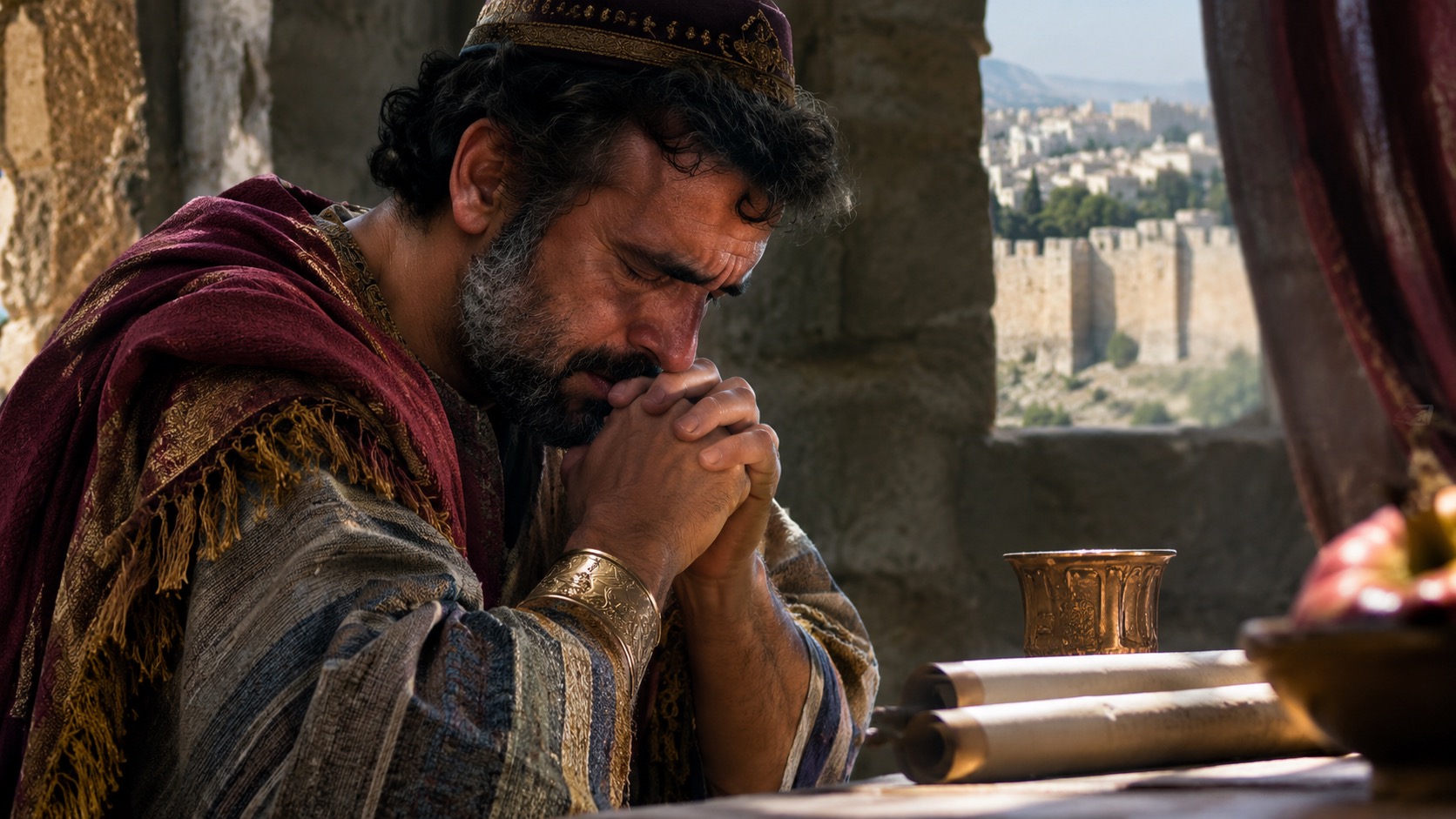
4Now when I heard these words, I sat down and wept and mourned for days; and I was fasting and praying before the God of heaven. 5I said, “Please, LORD God of heaven, the great and awesome God, who keeps the covenant and faithfulness for those who love Him and keep His commandments: 6let Your ear now be attentive and Your eyes open, to hear the prayer of Your servant which I am praying before You now, day and night, on behalf of the sons of Israel Your servants, confessing the sins of the sons of Israel which we have committed against You; I and my father’s house have sinned. 7We have acted very corruptly against You and have not kept the commandments, nor the statutes, nor the ordinances which You commanded Your servant Moses. 8Remember, please, the word which You commanded Your servant Moses, saying, ‘If you are unfaithful, I will scatter you among the peoples; 9but if you return to Me and keep My commandments and do them, though those of you who have been scattered were in the most remote part of the heavens, I will gather them from there and bring them to the place where I have chosen to have My name dwell.’ 10They are Your servants and Your people whom You redeemed by Your great power and by Your strong hand. 11Please, Lord, may Your ear be attentive to the prayer of Your servant and the prayer of Your servants who delight to revere Your name, and please make Your servant successful today and grant him mercy before this man.”
Now I was the cupbearer to the king.
BACKGROUND
GOD SEEMS TO LISTEN TO THE PRAYERS OF THE POWERFUL. HE LISTENED TO ESTHER, DANIEL, MOSES. WHY IS THAT?
There are nine prayers of Nehemiah in this book. This is the longest and sets the stage for everything to come. His prayer has similarities to the prayers of Ezra and Daniel in that it refers to repentance for sins committed and asks the Lord to act on his promises. “This prayer is actually a prayer of repentance. It can be outlined as follows:
- Invocation to God;
- Confession of sins;
- Request to the Lord to remember his people;
- Request for success.” (1)
Nehemiah’s prayer is marked by humility, even though he was an important man in the Persian kingdom. All prayer should begin with humility. “Cyril J. Barber, the author of a very valuable study of Nehemiah, has written wisely, ‘The self-sufficient do not pray; they merely talk to themselves. The self-satisfied will not pray; they have no knowledge of their need. The self-righteous cannot pray; they have no basis on which to approach God.” (2) Humility is the only right beginning to prayer.
Most commentators spend a lot of time on the history of Nehemiah’s prayer, but not a lot of effort analyzing it. That’s what we’ll attempt to do with this study.
EXAMINATION
(V.3) They said to me, “The remnant there in the province who survived the captivity are in great distress and disgrace, and the wall of Jerusalem is broken down, and its gates have been burned with fire.”
Every prayer is prefaced with a need. This is the opportunity that God is giving Nehemiah to pray for. Notice how bad things are: great distress and disgrace, broken down, burned with fire.
(V.4) Now when I heard these words, I sat down and wept and mourned for days; and I was fasting and praying before the God of heaven.
NEHEMIAH DID MORE THAN PRAY. WHAT DID HE DO? DID THESE THINGS MAKE HIS PRAYER MORE EFFECTIVE? WHY?
This is an indication that Nehemiah didn’t just pray this prayer once and wait for God to answer. He prayed over this situation many times. Notice Nehemiah’s passion about this issue. He “wept and mourned for days.” Truly caring about an issue will cause us to bring it before God repeatedly. It will occupy a central place in our thoughts and expressions, as it did with Nehemiah.
(V.5) I said, “Please, LORD God of heaven, the great and awesome God, who keeps the covenant and faithfulness for those who love Him and keep His commandments…
You may have heard of the acrostic, ACTS, as a framework for prayer. It stands for Adoration, Confession, Thanksgiving, and Supplication. Nehemiah’s prayer follows this method, as we shall see. He begins with adoration. Notice the language he uses. “Great and awesome God.” “Keeps covenant and faithfulness.” All of our prayers should begin with adoration or worship, recounting to God his character, attributes, and ways. His character: Keeps covenant. Attributes: Great and awesome. Ways: Faithfulness. By starting our prayers this way, we begin by recognizing how great God is and how small we are.
(V.6) …let Your ear now be attentive and Your eyes open, to hear the prayer of Your servant which I am praying before You now, day and night, on behalf of the sons of Israel Your servants, confessing the sins of the sons of Israel which we have committed against You; I and my father’s house have sinned.
WHY IS CONFESSION, SPECIFICALLY, NEHEMIAH’S CONFESSION, IMPORTANT?
Nehemiah moves on to confession. He says, “Confessing the sins of Israel…I and my father’s house have sinned.”
Nehemiah takes personal responsibility in confession for the sins of his people. He does not elevate himself above those whom he is praying for. This is the attitude of a godly man. Though there is no indication that Nehemiah was literally guilty of the sins he is confessing, he still confesses them as if he were the guilty party. He identifies himself with his people. Their faults are his faults.
(V.7) We have acted very corruptly against You and have not kept the commandments, nor the statutes, nor the ordinances which You commanded Your servant Moses.
Nehemiah doesn’t confess generalities. He confesses specifics. He doesn’t just say, “We’ve sinned.” He spells out the covenant violation they are guilty of. He confesses personal and national corruption, and violation of the Mosaic Law. This is important because it was under the law of Moses that God either blessed or cursed his people. Their national condition was predicated on the Mosaic covenant. The Lord spent considerable time in Deuteronomy spelling out the rules for national blessing and punishment for covenant violation, which included national exile for abandoning the law. To do so was to abandon one’s relationship with God—incurring God’s wrath.
(V.8-9) Remember, please, the word which You commanded Your servant Moses, saying, ‘If you are unfaithful, I will scatter you among the peoples; but if you return to Me and keep My commandments and do them, though those of you who have been scattered were in the most remote part of the heavens, I will gather them from there and bring them to the place where I have chosen to have My name dwell.’
WHY DOES NEHEMIAH QUOTE GOD’S PROMISES BACK TO HIM?
Repentance is part of confession of sin, which Nehemiah begins to do here. He begins by quoting God’s promise back to him. This is a general quote back to Deuteronomy 30:1-4. While God promised to punish his people for their sin, he also promised restoration if they repented. He is not painting God into a corner; he is capitalizing on God’s promise of restoration. Let’s look at the Deuteronomy passage.
“So it will be when all of these things have come upon you, the blessing and the curse which I have placed before you, and you call them to mind in all the nations where the LORD your God has scattered you, and you return to the LORD your God and obey Him with all your heart and soul in accordance with everything that I am commanding you today, you and your sons, then the LORD your God will restore you from captivity, and have compassion on you, and will gather you again from all the peoples where the LORD your God has scattered you. If any of your scattered countrymen are at the ends of the earth, from there the LORD your God will gather you, and from there He will bring you back.”
This is an important strategy in prayer that in our modern day we often miss. How often in your prayers do you quote God’s word back to him? It’s like a parent who promises their child a treat if they clean their room. The child comes back and expects the blessing, saying, “You promised that I would get a treat if I did this or that.”
God responds to his promises. We should recite God’s promises back to him in prayer, not because it forces God’s hand, but because we honor his word and God honors his own word as well.
(V10) They are Your servants and Your people whom You redeemed by Your great power and by Your strong hand.
Thanksgiving is seen here. By acknowledging their special status before the Lord, Nehemiah is demonstrating gratitude. This is especially true of his mention of redemption. Nehemiah is making a reference back to Exodus, when God redeemed his people from slavery out of Egypt. Because he redeemed them, he made them his own. They are a people in a special relationship with God, like no other. We know he is referring to Exodus because he mentions God’s “great power” and “strong hand.” Exodus 6:1 refers to God’s might and strong hand when redeeming Israel from the hand of Pharaoh.
(V.11) Please, Lord, may Your ear be attentive to the prayer of Your servant and the prayer of Your servants who delight to revere Your name, and please make Your servant successful today and grant him mercy before this man.”
Finally, Nehemiah expresses supplication. He states clearly what he is asking for: the favor of the king. There is also a reference to the fact that Nehemiah didn’t pray for this all alone. He says, “the prayer of your servants.” He may be referring to people in general who pray, or he may be referring to Hanani, his brother, and others whom he recruited to pray with him. I think this is most likely.
Prayer needs are best not shared alone. It is likely that Nehemiah asked others to pray alongside him for Jerusalem and for the king’s favor. This would make sense since the report was brought to him by his brother and other associates.
(V.11) Now I was the cupbearer to the king.
WHY DOES NEHEMIAH MENTION HIS POSITION?
Nehemiah mentions his position because it is an important one. Cupbearers were usually among the most trusted of a king’s confidants and had other important duties than just serving wine. The position of cupbearer was also a dangerous one. He was to taste the wine before giving it to the king. Thus, if the wine were poisoned, the cupbearer would die and not the king.
By noting his position, Nehemiah is saying he is in a position to help his people. All he needs is the favor of the king, as he could not act on his own. God sometimes puts his people in positions of influence to make a difference for his kingdom, but like Nehemiah, prayer should be our first resort: to rely on God’s direction and favor rather than just our own influence. Ezra, Esther, and Daniel also acted in this way, and God gave them great favor.
It should also be noted that Nehemiah didn’t pray this prayer once and look for an immediate answer. Other texts suggest that he didn’t receive the king’s favor until at least four months later. So, Nehemiah would have been beseeching the Lord in this prayer for four months, waiting for God to answer. He persisted in prayer, not giving up, until God gave him the favor he sought.
INTERPRETATION
What is the author’s big idea?
God puts us in positions of influence to make a difference for his kingdom, but we must first take the issue before God in prayer. He will answer according to his promises.
When hearing about the needs of his people, the first thing Nehemiah did was to mourn and pray. He didn’t come up with a five-point plan to save Jerusalem first. First, he prayed and persisted with God in prayer for months. During that time of prayer, he came up with a plan, but it was the result of prayer. Prayer is not our last resort in trouble; it is our first go-to when seeking a solution for whatever troubles us. Like Nehemiah, whatever we are passionate about will occupy our thoughts and our prayers. Do you want to recognize what you care about the most? Simple. What do you pray for the most? Nehemiah agonized over Jerusalem for months, seeking God’s solution in prayer. It was what he cared about the most.
APPLICATION
Consider, like Nehemiah did, how your position in life may be God’s opportunity for the kingdom. Nehemiah recognized that he was in an influential position, not for his own glory, but to benefit his people. This is true for us as well. Wherever you are is God’s place for you to influence. Begin that influence with prayer for the situation, trouble, and people.
Consider guiding the structure of your prayers with the ACTS acrostic. It is a good basic approach to prayer that brings together all of the necessary elements when we are addressing God.
- Adoration – praise God for his attributes, character, and deeds. God, I praise you because you are good, faithful, truthful, and great. There is no one like you in all of creation. There was no God before you, and there will be none after you. You alone are the great God who does wonderful things.
- Confession – acknowledge your sin before God. Be specific. Sin is a violation of God’s character, will, and word. God, I confess that I have violated your word and acted selfishly and wrongfully. My character is poor, and I need your forgiveness and strength to overcome my sin. If I’ve sinned against you and I don’t know it, reveal it to me that I might repent and make it right with you.
- Thanksgiving – express gratitude for all that God has done in your life, the lives of others, and the nation. God, you are faithful in all your dealings, and I thank you for not holding my sin against me. Thank you for forgiving me of my sin and directing my life. Thank you for my family, my friends, my church, and my nation. Thank you for blessing me beyond what I deserve. You are gracious, O God, and I’d be forever lost without your mercy.
- Supplication – pray for your requests and intercede for others as God brings them to mind. Lord, I pray for my family, that you would unify us under your word and keep us serving you by the power of your Holy Spirit. Please grow our church in spiritual maturity. Please bring our nation to repentance for rebelling against you. Be with me in all I do and help me to abide in your word.
Before we start asking God for things, even before we intercede for others, beginning with adoration, confession, and thanksgiving is appropriate. It puts our minds in the right context and attitude as we pray.
- Breneman, Mervin. 1993. Ezra, Nehemiah, Esther. Electronic ed. Vol. 10. The New American Commentary. Nashville: Broadman & Holman Publishers.
- Boice, James Montgomery. 2005. Nehemiah: An Expositional Commentary. Grand Rapids, MI: Baker Books.